

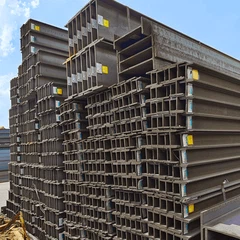






Yes, H - beam steel can be used in combination with concrete. In composite structures, H - beam steel is often embedded in concrete. The steel provides tensile strength, while the concrete provides compressive strength. This combination can make full use of the advantages of both materials, resulting in structures with high strength and good durabilitate .
1. Care sunt principalii factori care afectează prețul oțelului H - fascicul?
Principalii factori care afectează prețul oțelului H - fascicul includ costul materiilor prime (cum ar fi minereul de fier și oțelul de fier vechi), costul producției (inclusiv consumul de energie, costul forței de muncă și deprecierea echipamentelor), condițiile de cerere și oferta de piață și impactul politicilor relevante . În plus, calitatea și specificațiile oțelului afectează și prețul.} în plus
2. Cum să selectați tipul de oțel H - fascicul corespunzător în funcție de sarcina de construcție?
When selecting the appropriate H - beam steel type according to the construction load, it is necessary to first calculate the maximum load that the structure will bear, including dead load, live load, and other possible loads. Then, based on the mechanical properties of different H - beam steel types (such as yield strength, ultimate strength, and modulus of elasticity), and with the help of relevant structural design codes and software, the appropriate H - beam steel type with sufficient puterea și stabilitatea pot fi selectate .

3. Care sunt caracteristicile oțelului H - fascicul în ceea ce privește performanța de sudare?
H - beam steel generally has good welding performance. However, different steel grades may have some differences. High - strength H - beam steel may require more advanced welding techniques and pre - and post - welding treatment measures to ensure the quality of the weld. In general, proper welding materials, welding methods, and welding parameters need to be selected to avoid problems cum ar fi fisurile de sudare și porozitatea .